Automation and Machine Connectivity
Automation involves the use of technology to take on tasks with little human assistance. This has gone beyond using physical machines to the use of complex software to process data and make decisions. Machine connectivity involves using physical assets to communicate data across a network. It is the infrastructure that enables advanced automation.
The strength of automation and machine connectivity lies in knowing how to converge both. With the machines, you can generate a constant stream of raw data. Then, the automated systems can receive this data, process it, and execute physical actions without human help.
Also, this interconnected system can anticipate errors and prevent them from happening. Ultimately, they do not just combine to improve human efficiency but also to produce seamless data, freed of errors.
These two systems can be used in any professional field to improve efficiency. A combination of both systems reduces the human workload and improves their intelligence, creating a more powerful and productive environment.
The Power of Predictive Maintenance
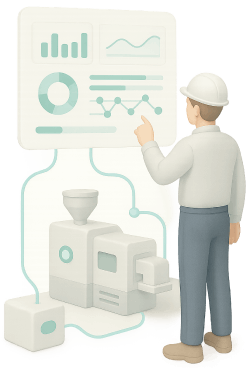
Predictive maintenance involves using data analysis to detect operational abnormalities and potential equipment defects, to allow for intervention before the failures occur. The goal of predictive maintenance is to reduce the frequency of maintenance. Therefore, instead of waiting for a specific time to perform a machine check or reacting to a breakdown, predictive maintenance relies on technology such as artificial intelligence, integrated systems, and the use of Industrial IOT (Internet of Things) to make this maintenance effective.
What exactly is the mechanism behind this predictive maintenance? It involves collecting operational data and analyzing it to know the patterns and abnormalities.
With proper analysis, the normal behavioral pattern of the machine will be noted, making it easy to detect deviations from the norm. The technology for this mechanism uses machine learning algorithms to become accurate over time.
One advantage predictive maintenance offers is preventing unplanned expenses. Being able to extend the useful life of a gadget by foreseeing a yet-to-come damage prevents unnecessary maintenance and offers a huge financial advantage.
Another important advantage of this mechanism is maintaining a safe workplace. Failures of some machines can pose a risk to people operating them. Therefore, by identifying these potential faults, solutions can be offered quickly, protecting both the personnel and the facility.
Human-Machine Interface and Workflow Optimization
A Human-Machine Interface is simply a dashboard that serves as a bridge between the operator and the machine. This dashboard presents information in a visual and easily understandable manner for the personnel to operate. This dashboard aims to reduce the cognitive load of the user and let them increase their efficiency.
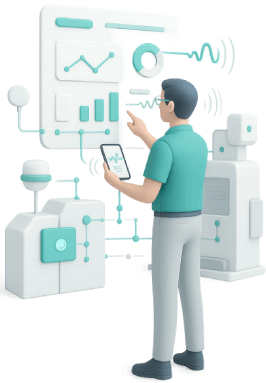
Modern HMIs work as a command center. It picks data from multiple systems and presents them in a simple, cohesive view. This makes it easy for the operator to see and understand different processes at a single glance. Therefore, instead of viewing multiple isolated panels, they can control the full workflow from a single station.
Below are some examples of HMIs:
- Centralised Control Room Dashboard: A big screen device that collects data from different parts of a facility and presents it in the form of charts and graphs for analysis.
- Voice Control HMI: An interface that permits the use of voices to control systems and carry out actions.
- Mobile HMI: This includes applications on phones and tablets for monitoring and controlling any parts of a facility.
- Augmented Reality HMI: Smart electronic glasses that present information for a technician to analyze.
Workflow optimization is the process of analyzing every step of a work process to improve efficiency. Here, different steps of a business process are rechecked to detect bottlenecks and eliminate inefficiencies. The goal of workflow optimization is to create a quicker and more reliable sequence of information.
How is HMI and workflow optimization connected? A well-designed HMI is important for the success of workflow optimization. The data provided by the HMI allows for meaningful workload optimization. Bottlenecks and other inadequacies are visible with HMIs, making the operators know where exactly the problem is coming from.
With HMI, operators can be presented with clear instructions for complex projects and automatically flag exceptions that require human intervention. Therefore, different processes are done according to standard, errors are eliminated, and tasks are completed, using the human element of workflow.
Operational Reliability
Traditionally, scheduled maintenance and reactive repairs were the hallmarks of operational reliability. This was, however, inefficient due to unnecessary maintenance. Since companies measured their performance based on past mistakes, little was done to avoid future problems. This led to a vicious cycle of planned and unplanned downtime.
A new approach to operational reliability is now possible due to connected systems. It involves the use of sensors and machine connectivity. With the Internet of Things (IoT), data showing the performance of assets can be analyzed. Some of the features that can be monitored and analyzed include energy consumption, temperature, and vibration. Overall, this approach leans towards continual monitoring of the asset.
This new model follows the mechanism of predictive maintenance. If future failures can be identified, then maintenance can be done before there is evidence that it is needed. Ultimately, companies that follow this approach are now proactive, rather than being reactive to random failures.
Improved Human Efficiency
Improved human efficiency is more than just making people work faster. It's more about yielding effective results with less wasted effort and time. Traditionally, humans often source data manually and perform a lot of physical tasks. This reduces the time for extra work, especially for those who require human reasoning and judgment.
With connected operations, everything is easier! Now, there is reduced need for data collection, report generation, and even physical actions like data sorting or scanning. With machines handling these duties, humans are freed from work that seems monotonous and boring. Humans can now focus their attention on more complex duties that will require their intelligence, rather than just physical movement.
Another way of improving human efficiency is the integration of Human-Machine Interfaces. With HMIs turning complex system data into a simple format, operators no longer need to decipher the processes in each system. A quick understanding of the complex system reduces the time required to make a correct decision and prevent errors due to misinterpreted data.
Also, with access to data, the delay is minimal during data processing. Without leaving their workspace, workers can have access to any form of data they want. This reduces the need for them to move physically from one place to another in search of real-time data.
Connected systems can also improve efficiency through training. By using Augmented Reality or other tools to train workers, they understand a huge chunk of what the work demands, even without prior experience.
This is important, especially for novices who lack hands-on experience in the past. Therefore, new employees do not undergo prolonged training and are still able to complete complex tasks at a high level of competency.
The goal of connecting systems in the workspace is to have an environment where humans and machines coexist and can complement each other's strengths. With the systems handling data collection, processing, and real-time monitoring, humans can use their cognitive skills to solve problems.
Therefore, humans must adapt to the use of these systems and not see them as a competitor. By collaborating with these systems, the work process becomes significantly more productive.
How to Build Smarter Systems
The development of smarter systems starts with getting big data. Here are the steps involved in building smarter systems.
Data Collection and Connectivity
The first step towards building strong systems is to build a strong foundation of data. With the use of sensors and connected devices, raw data about the performance of machines and the consumption of energy can be obtained.
The Phase of Analysis
After the data has been collected, it can then be processed using analytics platforms and algorithms. Here, raw information will be packaged and turned into useful data.
Implementing Optimized Processes
The results obtained from the analysis are then used to make changes. This can include making changes in the machine for better performance, getting rid of bottlenecks by redesigning a workflow, and creating new standards to reduce future errors. This is aimed at testing hypotheses created by data analysis to create new interventions.
Monitoring and Measuring Impacts
After a change has been implemented, the system can track the progress of the change. Key Performance Indicators can be used to measure the level of productivity, quality, and other critical metrics of the new change.
The Feedback Loop
Whatever results are obtained from the monitoring phase serve as feedback. If the new change gives a positive result, it signifies improvement and can be used across different parts of the operation. However, if negative results are obtained, the changes can be readjusted. The point of the feedback is to let the system understand failures and how to detect them in the future.
Metrics for Success: A Good Return On Investment

The best way to measure success or a great return on investment comes from operational efficiency gains. One of the Key Performance Indicators is the reduction in unplanned downtime. Reduced downtime means that there is increased productivity and revenue in the long run. Other ways of gaining financial benefits include reduced costs of maintenance, lower energy consumption, and reduced cost of labour.
Beyond all of these savings, an analysis must be made to assess the indirect benefits. These benefits include workforce productivity, safety of the workplace, and satisfaction of the customers, all of which contribute to a long-term improvement in the value of the product. Therefore, a good metric for success depends on these indirect benefits and the cost of savings.
Conclusion
Connected operations are taking over! Rather than being a distant vision, it is a reality that is shaping the industrial world. By implementing these systems into the workforce, productivity is increased, and the overall human workload is decreased.
These machines aren't made to replace humans but to help improve working conditions. Therefore, companies that adopt this system aren't just improving their output but also laying a foundation for long-term success.
Quick Links
IoT = Internet of Things and IIoT = Industrial Internet of Things. Here are some examples of real-life applications in both the Consumer and Industrial markets. Just some examples.#infographic by @antgrasso via @antgrasso_IT > #IoT #IIoT pic.twitter.com/mYfBpF5WPn
— Antonio Grasso (@antgrasso) October 4, 2020
With the kind help from
