Why Industrial Digital Transformation Needs a Roadmap
In industrial environments, you can’t just flip a switch and modernize everything at once. These companies operate machinery that can’t go offline, plants that run 24/7, and systems that have been around for decades.
That’s why a roadmap is needed as it keeps improvements controlled, predictable, and tied to business value. When everyone in the company follows the same plan, decisions become easier because the costs stay visible. This is why the whole transformation becomes less of a gamble and more of a calculated shift.
Understanding Where You Are Today
To secure the tools and equipment you need for big upgrades, you need a proper insight and idea of your current setup. This part always feels boring, but it’s honestly the most important step. The moment you skip it, you’d have to start taking guesses when making decisions.
You’re basically asking:
“What do we have, what’s working, and what’s slowing us down?”
To get that answer, you look at four areas.
The Technology Landscape
Most industrial companies still run systems that were installed when ringtone phones were trending. And sure, these systems still work, but they come with serious issues:
- Nothing integrates properly
- Everything requires manual work
- Costs keep rising because vendors barely support them
- One small failure can stop an entire line
The process here is just like doing a house inspection before renovating.
The Operational Processes
Technology shouldn’t force your business to behave awkwardly. The goal is for it to be able to remove friction.
So, to ensure everything works perfectly, you should check the following:
- Maintenance routines
- Production flows
- Inventory processes
- Quality checks
You’re looking for delays, bottlenecks, and repeated manual tasks.
The Data Situation
Industrial companies generate unbelievable amounts of data, sometimes more than tech firms. But the data is usually scattered across spreadsheets, machines, email chains, and outdated software. This stage is what shows you how ready your company is for analytics, AI, dashboards, and anything else data-driven.
Your job here is to figure out:
- Where data is stored
- Who controls it
- Whether it’s accurate
- How quickly teams can access it
The Workforce Capabilities
Digital tools won’t magically transform a company, it is the people who do that. This is the part leadership often underestimates forgetting how important they are.
Their job is to check:
- Whether your teams understand digital tools
- Where the biggest skills gaps are
- How comfortable employees are with change
- Whether managers push digital adoption
A roadmap that ignores people always collapses, but the one that includes people always succeeds. By the time you finish this entire assessment, you’ll have a clear picture of your starting point that gives you clarity on what to attack first and what can wait.
Migrating from Legacy Systems
Now we’re getting into the part that stresses everyone out and that's the legacy systems. These platforms have been around forever, and despite how slow they can be, ripping them out carelessly isn’t the best option.
So, the trick is to modernize them in safe and structured stages.
Step 1: Prioritize What Needs Modernizing First
The first step to migrating is to figure out which systems deserve attention. You definitely don’t try to upgrade everything at once because that’s the fastest way to overload your teams and derail projects. For the best results, you have to start with systems that:
- Cause the most downtime
- Refuse to integrate with new platforms
- Block automation
- Bleed maintenance costs
This keeps the transformation focused and manageable.
Step 2: Decide the Best Approach
The next stage is choosing how each system should be modernized, and this part requires honest evaluation. Keep in mind that not every old system needs a full rebuild. Sometimes you can just need to decide on whether you need to replace, upgrade or integrate. To do any of these, you have to begin with the following tips:
- Modernize the backend
- Move it to a cloud-hosted version
- Wrap it with an API
- Upgrade specific modules
Using this hybrid approach allows you to save money and reduce risk.
Step 3: Organize the Migration into Phases
Once you know what needs to change and how you plan to change it, the next step is organizing the migration into clean, predictable phases. A phased approach stops everything from turning chaotic.
You usually start with low-risk systems so your team gets comfortable before moving on to the heavy-duty ones. You have to do things like:
- Move low-risk systems first
- Test new tools alongside old ones
- Transfer data in well-controlled batches
- Train teams before launching anything live
Building a Cloud or Hybrid Architecture
Most industrial businesses can’t run fully on the cloud, and they also can’t survive by staying fully on-premise. That’s why hybrid architecture has become the sweet spot. Here are some of its many benefits:
Cloud for Flexibility
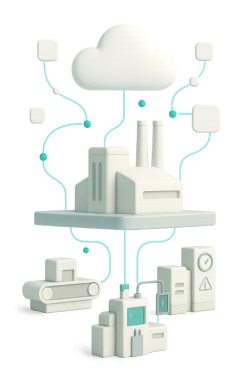
The cloud becomes the obvious home for the systems that benefit from scalability, speed, and easy updates. When you put these tools in the cloud, you can expand capacity without buying hardware.
Also, you can deploy new features instantly, and your teams can access tools from anywhere. It gives you the kind of freedom that on-premise setups simply can’t match.
It also lets your data flow more naturally because it removes the physical barriers that usually slow things down inside a factory. In simpler terms, anything that thrives on fast improvements or shared access fits perfectly here.
On-Premise for Stability
Even with all the hype around cloud technology, on-premise systems still matter a lot in industrial environments. Some operations are so time-sensitive that even a small delay would cause real problems.
That’s why critical control systems, sensitive machine operations, and anything requiring ultra-low latency stays on-site. When you keep these systems close to the equipment floor, you reduce risk which means your machines can keep running even if the network goes down.
Also, your operators can respond faster because the systems they rely on are physically near them. And your data stays within your walls, which helps when security or compliance is a priority.
Edge Computing for Speed
Edge computing comes into the fold when you need real-time decision-making at the machine level. Imagine sensors analyzing vibration patterns or temperature changes the moment they happen, without waiting for the data to travel to a remote server. That instant processing is exactly what edge devices provide.
With edge computing, your machines are designed to act automatically on their own. They can detect problems earlier, make adjustments faster, and produce data that aligns perfectly with what’s happening on the floor. Even if connectivity drops, the edge layer keeps working because it doesn’t rely fully on the cloud.
Creating New Digital Services
Once your foundation is solid, you can start building digital services to improve team work and customer service. Some areas that will experience improved change include:
- Real-time equipment monitoring
- Predictive maintenance dashboards
- Digital twins
- Automated scheduling
- AI-powered quality checks
- Customer self-service portals
These tools don’t just make operations smoother. They open new ways to make money, deliver value, and differentiate themselves from every other competitor.
To build these services properly, you need:
- Unified data
- Stable APIs
- Cross-functional digital product teams
- A fast feedback loop

Designing a Scalable Roadmap
A roadmap makes you carry out the whole transformation process in an organized fashion. Every step fits into a larger phase so the company always knows what’s next.
Most strong roadmaps follow four big phases. Let’s take a look at them.
Phase 1: Stabilization
The first phase starts with stabilization, which is all about getting your house in order. Many industrial enterprises still deal with unpredictable systems, downtime, and outdated processes that slow everything down. However, this initial phase solves this problem by creating the reliable foundation you need to fix weak points, tighten security, and improve system uptime.
The focus here is majorly to make sure your core operations stop fighting against you. When things finally run the same way every day, without surprises, the business is ready to move forward.
Phase 2: Modernization
Moving to the next phase, you have modernization, which feels more like giving your systems the upgrade they’ve been waiting for. At this stage, you get familiar with current technologies, and decide to replace any aging infrastructure. In to bring in cloud or hybrid setups that support real-time work.
It’s the phase that shifts you from “we’re stable” to “we’re finally up to date.”.
Phase 3: Optimization
After that comes optimization, and this is usually the phase where the real value becomes obvious. Since the systems are now both steady and modern, you can start fine-tuning how the business works.
What you’ll now have is a smoother workflow where decisions become more data-driven. The moment you enter this phase, productivity levels begin to rise because you're no longer held back by outdated processes or inefficient routines.
Phase 4: Innovation
The final phase is where transformation isn’t concerned about fixing or improving and becomes about creating. Here, there’s no need to force the old models to run better but to explore new models entirely.
Once you enter this stage, you will be able to integrate the use of AI, Industrial IOT, digital twins, advanced analytics, predictive maintenance, or autonomous processes. It then becomes possible to develop new capabilities, new services, or new revenue opportunities that give you a real competitive edge.
Wrap Up
With this digital transformation roadmap, you hopefully now have a way to guide your business through change without overwhelming your teams or disrupting your operations. We’ve broken the journey into simple steps like this so that the whole thing feels less heavy and more achievable.
And with the right mix of clarity, structure, and patience, your company becomes stronger, more modern, and more prepared for whatever the future brings.
Quick Links
IoT = Internet of Things and IIoT = Industrial Internet of Things. Here are some examples of real-life applications in both the Consumer and Industrial markets. Just some examples.#infographic by @antgrasso via @antgrasso_IT > #IoT #IIoT pic.twitter.com/mYfBpF5WPn
— Antonio Grasso (@antgrasso) October 4, 2020
With the kind help from
